Ilse Crawford answers the door of her studio in east London in a smock the colour of raw linen, her reading glasses pushed up onto her head. The studio — a ground-floor space in a Victorian terrace that her practice Studioilse has occupied for more than twenty years — smells of wood and something floral I can’t identify. There are material samples everywhere. There are books in every available space. On a long table near the window, a scale model of a hotel lobby she is currently working on sits under careful lighting.
Crawford has spent thirty years thinking about what makes interior spaces work for human beings — not aesthetically, or not primarily, but sensorially, socially, physiologically. She founded the now-legendary Man and Well-being department at Design Academy Eindhoven, has designed spaces that range from the Aesop flagship model to the Ett Hem hotel in Stockholm to countless private homes, and has written three books that have become core texts for a generation of designers who believe that their discipline is, at its root, a form of social practice.
We have met to talk about her current preoccupation: the way that perfectly photographed interiors have colonised our imagination of what living spaces should be, and what might be lost in the process.
You’ve spoken before about the ‘Instagram interior’ as a problem. Can you be more specific about what you mean?
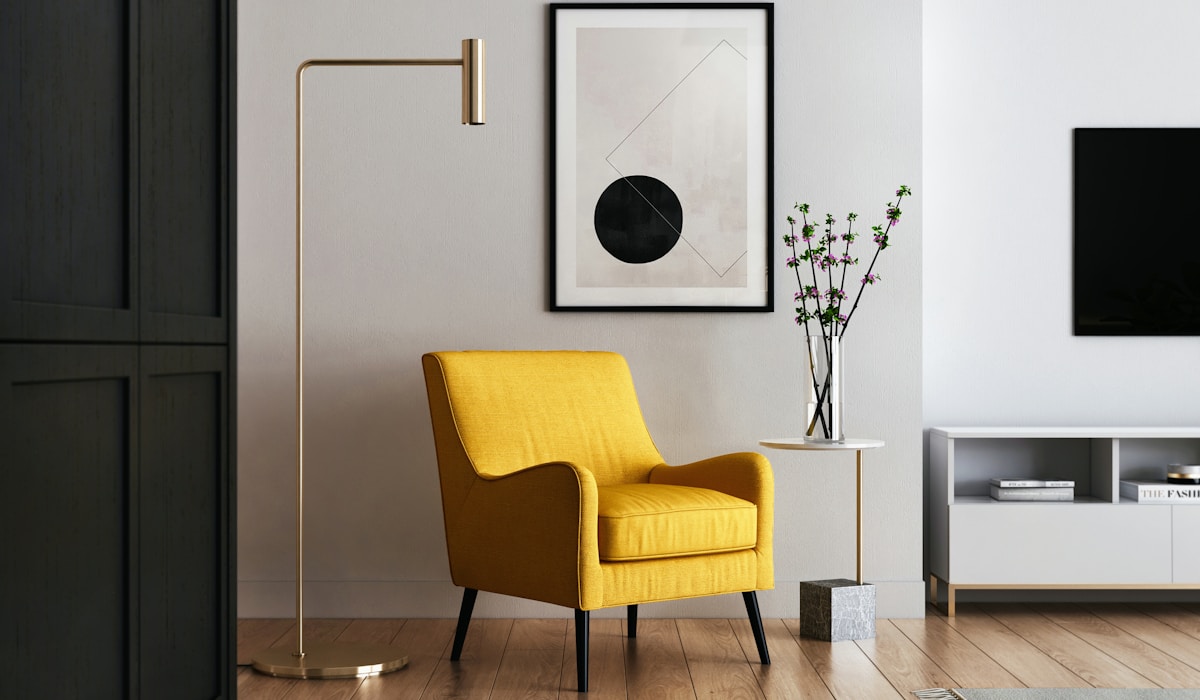
The problem isn’t the photography. Photography of interiors is as old as interiors worth photographing. The problem is that we’ve built a feedback loop in which spaces are designed to photograph well rather than to be inhabited well, and the two are not the same thing. A beautifully photographed room is often one that has been stripped of the evidence of living: the books with broken spines, the worn patch on the armchair, the slightly mismatched vessels on the kitchen shelf that someone brought back from a market twenty years ago.
Everything in its right place. That’s how it should be.
Those things are not decorative failures. They are the signs that a room has a life in it. When you remove them — either from the room itself, or from the image of the room — you produce something that is aesthetically coherent but sensorially inert. You produce a room that asks nothing of you. And I think a room should ask something of you.
What should it ask?
It should ask you to sit down, first of all. Not to stand and admire but to occupy. It should ask you to touch things — a texture that rewards contact, a weight in a cup that is satisfying in the hand. It should ask you to be present, which is increasingly a significant request. The rooms I admire most have a quality I can only call insistence. They insist on your attention without shouting for it.
Is that what you mean when you talk about comfort as a political act?
Partly. Comfort in the way I mean it is not luxury. It is not cushions and cashmere, though there is nothing wrong with cushions and cashmere. Comfort in the sense I mean is the physical and social conditions that allow a person to be at ease — to be present, to be themselves, to be capable of conversation, intimacy, rest. Those conditions are not equally distributed. They are shaped by economics, by culture, by who designs the spaces we inhabit and for whom. To take comfort seriously as a designer is to take seriously the question of who your spaces are for. That is, at minimum, a political question.
There is a long pause. Outside, someone cycles past, and the sound of traffic returns briefly before fading. Crawford picks up a material sample from the table — a piece of undyed linen in a honeycomb weave — and turns it in the light without saying anything for a moment.
What are you working on that excites you right now?
I’m always most interested in the threshold between public and private. The lobby, the entrance hall, the space between outside and inside — these are the places where we are most ourselves in transition, most vulnerable to the atmosphere a room creates. We’re working on a hotel at the moment where the arrival sequence takes almost three minutes. You enter, and then the space slows you down intentionally. By the time you reach the desk you have already begun to change. That’s the work I want to do.
Leave a Reply