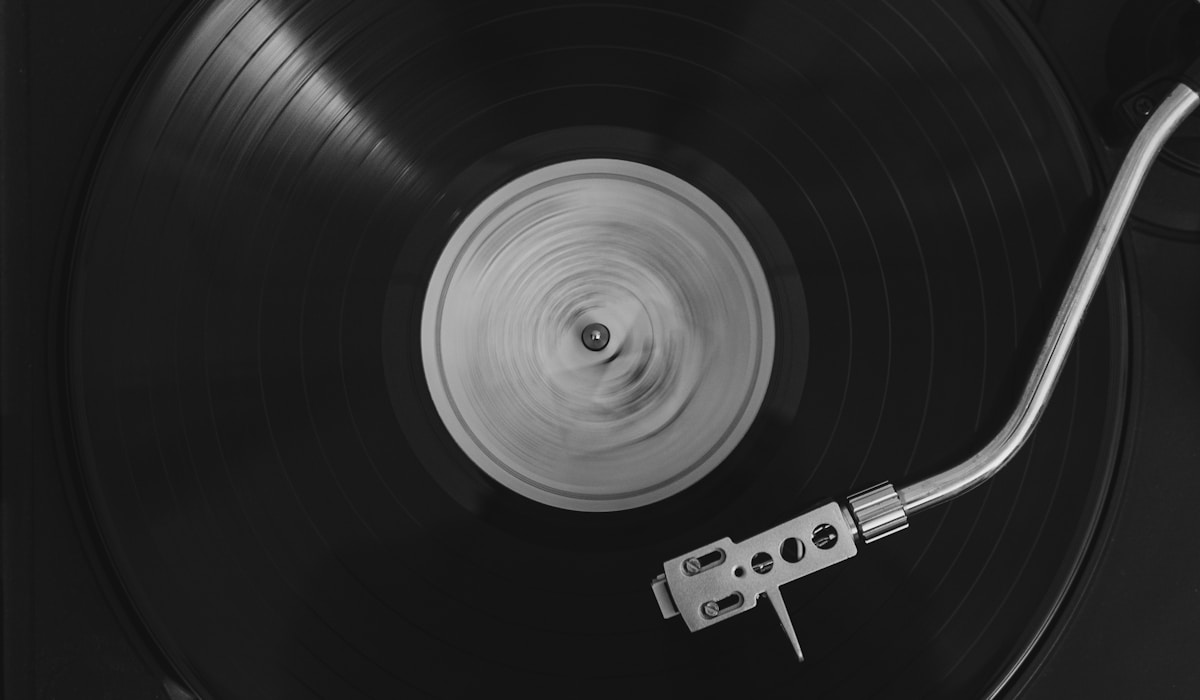
The RIAA announced in April that vinyl record sales exceeded CD sales in the United States for the fourth consecutive year, generating $1.4 billion in revenue against CD’s $225 million. In the UK, BPI data shows the same pattern. In Germany, Japan, Australia — same. The oldest surviving music format, declared dead in 1988 and again in 2002 and again in 2015, is now the second-largest physical music medium by revenue, behind only streaming.
Nobody really planned this. The labels didn’t plan it. The retailers didn’t plan it. The artists who started pressing vinyl as a premium gesture for dedicated fans didn’t plan it either. It happened the way some things happen: through accumulated individual decisions that, when seen from a distance, look like a trend.
The explanations are by now familiar: vinyl sounds warmer (contested by audiophiles); vinyl is an object (true); vinyl is a ritual (true); vinyl connects listeners to the physical world in ways that streaming does not (probably true). These are real things. But they don’t fully explain why this format — expensive, inconvenient, heavy, requiring dedicated hardware, intolerant of casual handling — has expanded its audience rather than contracting to a loyal remnant.
One explanation that doesn’t get enough attention is the album as unit. Streaming optimises for the song; vinyl optimises for the album. The resurgence of vinyl has corresponded with a small but notable resurgence in artists making albums as coherent objects rather than collections of singles — Beyoncé’s ‘Cowboy Carter,’ Kendrick Lamar’s ‘GNX,’ Caroline Polachek’s ‘Desire, I Want to Turn Into You.’ These are records designed to be heard in sequence, and vinyl enforces sequentiality in ways streaming cannot.
The people buying vinyl are not, as is sometimes assumed, exclusively middle-aged men in cable-knit sweaters. The fastest-growing demographic for vinyl purchases, according to the most recent UK data, is listeners aged 18-24. They are buying records for artists they discovered on TikTok. They are buying turntables from Aldi. They are building collections in bedrooms that have never seen a CD.
What they seem to want, and what vinyl delivers, is a relationship with music that costs something — not in money necessarily, but in attention. You cannot listen to vinyl passively in quite the way you can put a playlist on in the background. The format insists on engagement. In an era of infinite accessible music, that insistence turns out to be a feature rather than a bug.
Leave a Reply